The Agency for the Management of the Education System, IP (AGSE, IP) and the Institute for Education, Quality and Assessment, IP (EduQA, IP) held a workshop on the 28th and 29th April entitled Developing Language-sensitive Leaders and Teachers for Inclusive Multilingual Schools. This workshop is part of Supporting Multilingual Classrooms, an initiative from the European Centre for Modern Languages of the Council of Europe (ECML/CoE).
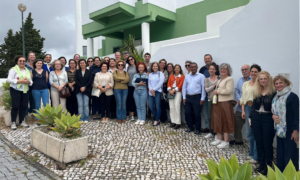
The event took place at the Seminário Nossa Senhora de Fátima, Alfragide, and brought together head teachers and teachers from thirteen school clusters across different regions of the country, involved in projects and practices related to Portuguese as a Second Language (PLNM) and the integration of migrant learners in multicultural and multilingual contexts.
This workshop is part of the strategy of AGSE, IP, and EduQA, IP, to strengthen policies of inclusion, democratic culture, and the promotion of linguistic and cultural diversity in Portuguese school clusters, in a context marked by the increase and diversification of migratory flows. As such, the workshop aimed to support schools in building more inclusive educational responses, by promoting the educational success and integration of newly arrived migrant learners into the Portuguese education system.
Katja Schnitzer and Catherine Carré-Karlinger were the ECML/CoE experts who prioritised collaborative work, debates, sharing of practices and strategies for promoting linguistically inclusive school environments.
At the end of the workshop, participants’ feedback was highly positive. The relevance and timeliness of the topic, the quality of the organisation, the importance of the methodologies used, and the need to disseminate best practices in the field have been particularly highlighted. Several participants have also emphasised the inspiring nature of the workshop, which was perceived as a starting point for future learning across schools.
The implementation of this initiative represents another step in strengthening international cooperation and developing educational policies geared towards inclusion, contributing to empowering Portuguese schools to meet the challenges associated with the growing linguistic and cultural diversity present in the national education system.

Publicado em May 13, 2026 | Atualizado em May 14, 2026